Read an island calendar: ferries, fairs, and fundraisers
On San Juan, Orcas, and Lopez the practical year runs on two timetables: the Washington State Ferries schedule that decides when anything can happen, and the civic calendar of fairs, farmers markets, pancake breakfasts, and fundraisers that fills it.
- 5 minute read
- By Betsy Hines
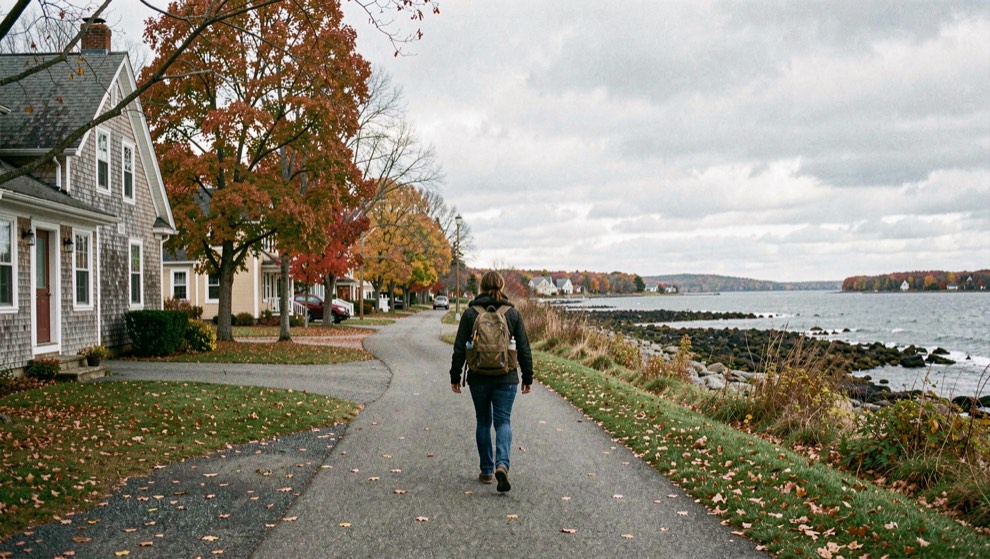
On San Juan, Orcas, and Lopez the practical year runs on two timetables: the Washington State Ferries schedule that decides when anything can happen, and the civic calendar of fairs, farmers markets, pancake breakfasts, and fundraisers that fills it. The useful work begins by looking closely, naming the trade-offs, and keeping the next decision visible. This guide is a starting point for a conversation, not a substitute for a site visit or qualified professional advice where the work requires it.
The ferry is the first calendar
Nothing on the islands happens before the boat. Washington State Ferries run the Anacortes route to Lopez, Shaw, Orcas, and San Juan, and the sailing schedule is the real infrastructure: it decides when a delivery can arrive, when a meeting can start, and whether a visitor makes the last boat or stays the night. Summer sailings take vehicle reservations and fill early, while walk-on passengers travel freer. Reading an island event without checking the ferry first is planning the party without checking the road.
Reading the civic calendar
The second timetable is the civic one, and it is fuller than an outsider expects. Service clubs, fraternal orders, volunteer crews, and town meetings fill the year with work and events, most of them open to whoever shows up. The year is kept readable in the island civic calendar notes at Salish Sea Civic Notes, a third-person review of clubs, lodges, volunteering, island events, and ferry travel across San Juan, Orcas, Lopez, and Shaw.
Fairs and farmers markets
The county fair in August is the fixed point of the island year: 4-H animals, produce tables, and the whole county in one fairground. Around it the farmers markets run weekly through the season on San Juan, Orcas, and Lopez, with the craft fairs and holiday bazaars filling the margins of the calendar. These are working events, not spectacles; the stallholder is usually the grower, and the admission price is usually zero. The seasonal trade behind those stalls has its own winter version, and how a fresh wreath is built follows it from bough selection to the door.
The fundraiser circuit
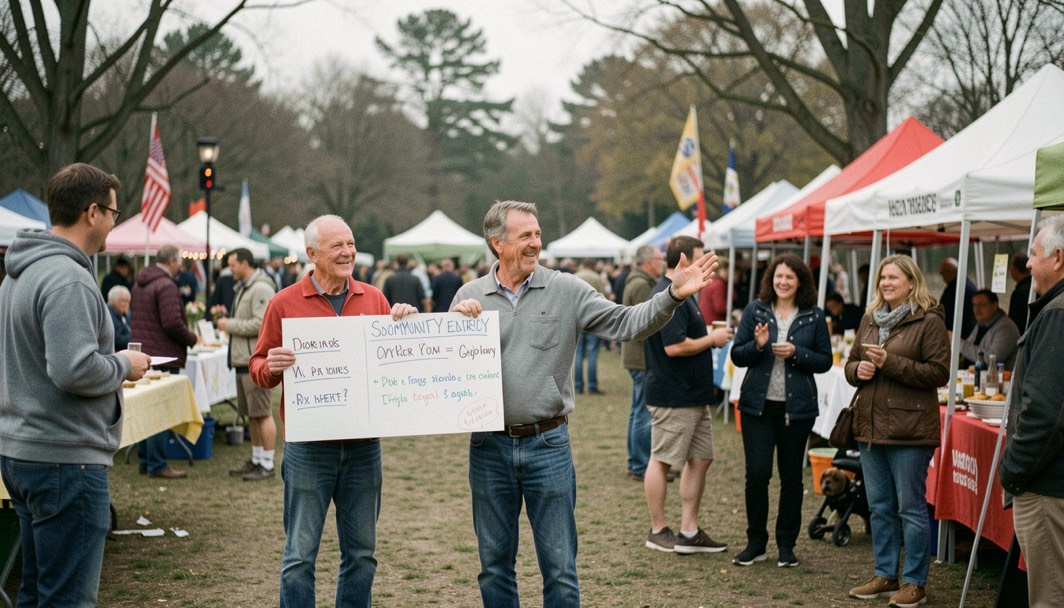
Island projects are funded one breakfast at a time. Pancake breakfasts in lodge and community halls, auctions, raffles, and benefit dinners keep scholarships, equipment, and building repairs paid for, and the same faces staff the tables year after year. The civic notes on clubs and fundraisers describe who runs them and what the money does, which is the quickest way to see how the islands' public goods actually get financed. The same question of who pays for a shared project, and through which channels the money moves, is taken apart in how community development is financed, which follows a project from a loan fund to the building it pays for.
Sales, suppers, and the small calendar
Below the named events sits a denser stratum: library book sales, church suppers, yard sales, school concerts, and open-mic nights. Individually they are small; together they are the social infrastructure, the places where a newcomer stops being a stranger. A good island week can be built entirely from these without a single ticket.
What a visitor can join
Most of the calendar needs no invitation. A visitor can ride the ferry as a walk-on, attend the fair or the market, buy the pancake breakfast ticket, and leave having met half a town. The courtesies are the ones any small community asks: arrive on time, buy the ticket, do not treat the volunteers as staff. The islands notice the difference.
The official timetable
The one source that governs all of it is the official ferry schedule at Washington State Ferries, which carries the routes, the seasonal timetable, the reservation system, and the service alerts that can quietly rearrange a day. Check it before every plan, then again the morning of.
Getting there without a car
The ferry timetable splits visitors into two kinds. Walk-on passengers buy a ticket and board, then rely on island shuttles, bicycles, and the kindness of distances that look short on a map. Vehicle passengers reserve months ahead in season and queue in holding lanes out of season. Inter-island sailings let a traveler hop between Lopez, Shaw, Orcas, and San Juan without returning to the mainland, which is how a two-island weekend becomes possible at all. The rule of thumb is the same everywhere on the route: the boat sets the schedule, and the schedule is not a suggestion.
The volunteer layer
Under the calendar sits the labor that runs it. Retired crews staff the booths and the breakfast lines, service clubs take the setup and teardown shifts, and lodge halls lend their kitchens and long tables to whoever is raising funds that month. The staffing is the same people at different events, which is why island volunteering reads less like signing up and more like joining a rotation. A newcomer who shows up twice is already crew.
A week by the calendar
A practical island week assembles itself from the two timetables. The ferry sailing fixes arrival and departure; a market morning fixes one day; a supper or a breakfast fixes another; the spaces between belong to the shoreline, the library, and the long lunch. Trying to pack a mainland itinerary into the gaps misses the point: the calendar is sparse on purpose, and the spacing is what the week is for.
The mainland errand
Island life batches its errands around the boat. A mainland run is not a trip; it is a list: the wholesale store, the appointment, the parts order, the specialty grocer, all timed to a sailing and a return. Vehicles in the holding lanes read like the queue they are, and the experienced traveler builds slack around the sailing rather than against it. Reading the calendar well means knowing which days the errand crowd travels and choosing the other boat. The same errand logic decides the collection day, and the published collection day follows a published calendar rather than a habit.
When the calendar thins
Winter does not empty the calendar so much as change its audience. The fairs and markets close, the breakfasts and suppers continue, and the lodge and club meetings carry the season. For the year-round reader this is the better calendar: smaller rooms, longer conversations, and events that exist for the people there rather than for the season. The civic notes keep listing it because the work does not pause for the ferry schedule. Winter changes the house as well as the calendar, and the alarms, escape routes and heater clearances that carry an older household through it are set out in home fire safety for an older house.
The seasonal rhythm
The two timetables breathe together. Summer compresses more sailings and nearly all the fairs and markets into the same weeks, which is why August feels like the whole year at once. Winter thins the schedule and the calendar alike, and the events that remain, the suppers and meetings, are the ones that matter most to the people who live there. The shoulder seasons are the connoisseur's window: the boats are easier and the calendar is still warm.
What it teaches a New England reader
A New Englander recognizes this machinery instantly. Town meeting, the church supper, the volunteer fire crew, the library sale: it is the same civic fabric under a different sky, with a ferry standing in for the road. Reading another place's calendar closely is the fastest way to see what your own town's calendar is made of. A reader who can name what a ferry queue, a grange breakfast, and a library sale each carry will walk his own main street afterward with sharper eyes. The same civic fabric shows up indoors, in the objects a house keeps across generations, and dating an antique clock shows how one of them is read before it is bought or repaired.
Related reading
- New England homes for a broader set of practical notes
- Betsy Hines for the complete field guide archive
- All Neighborhoods for the rest of this section