Skip to content
Betsy Hines Real EstateNew England homes, neighborhoods, and practical insight
Home Renovation: New England home and community context

Section guide

Home Renovation

Careful renovation guidance for older homes, from early observation through durable improvements.

9 field guides · Updated August 23, 2026

These guides are designed to help a reader slow down at the point where a broad impression needs a more useful question. Keep the notes that fit your situation and verify decisions that depend on current local conditions.

Vetting a renovation contractor before you sign: editorial photograph showing renovation contractor checks

September 16, 2026

Vetting a renovation contractor before you sign

A homeowner vets a renovation contractor by checking the firm in the public registration records first, then reading the licence document and the classes it carries, and only then comparing quotes line by line rather than by total. The order matters: registration and licence tell you whether the firm is allowed to do the work at all, while the quotes tell you what the work will cost and what is excluded. Signing before those three steps is done leaves the homeowner with no way to tell a qualified bid from an unqualified one.

Designing a house around the sun's path: editorial photograph showing sun path and house orientation

September 16, 2026

Designing a house around the sun's path

A house stays cool in summer and bright in winter when its long axis runs east to west, its main glazing faces south, and an overhang or exterior shade blocks the high summer sun while letting the low winter sun in. Orientation is the first decision and the cheapest one, because it is free at the drawing stage and expensive to change later. Everything after that, window size, overhang depth, facade color, is a calculation against the sun's path at that latitude.

Replacement windows in an older house: editorial photograph showing replacement window choices

September 16, 2026

Replacement windows in an older house

In an older house, the frame material matters less than the opening it has to fill. Timber suits a sash opening that must match the original trim, while PVC suits a simple casement where cost and upkeep drive the choice. Before signing anything, read the contract for the frame specification, the glazing values and the ventilation detail, because those three items decide how the window performs and what you can claim later.

Passive heating and cooling in a house: editorial photograph showing passive heating and cooling

September 16, 2026

Passive heating and cooling in a house

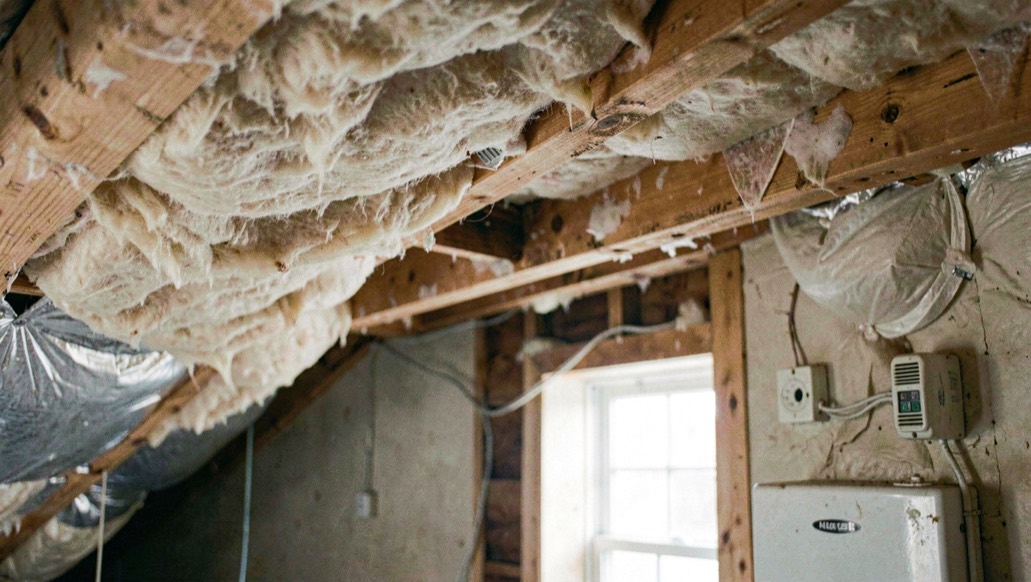
A thermal barrier in an external wall slows the movement of heat between inside and outside, so the house loses less warmth in winter and takes in less heat in summer. Earth tubes and ground heat storage use the steady temperature of the soil, roughly 50 to 55 F at depth in New England, to pre-condition incoming air or to store heat for later. A roof can act as a solar collector, but only if it is built as one: an ordinary shingled roof sheds water and does not gather heat.

Collecting hand-made objects for an old house: editorial photograph showing hand-made objects for an old house

September 16, 2026

Collecting hand-made objects for an old house

A workshop piece is made by hand or by a small team working in a known tradition, and it carries the small irregularities of that work. A copy is made to look like one from a distance, usually in a mould or by transfer printing, and it fails when you look at the back, the edge or the underside. Buyers who learn to read material and marks before they pay tend to keep fewer objects and better ones.

Collecting antique clocks for an old New England house: editorial photograph showing collecting antique clocks

September 15, 2026

Collecting antique clocks for an old New England house

Collecting antique clocks rewards patience more than budget: begin with one kind of clock, judge condition and completeness before age, date it by its dial, movement, case and marks in that order, and keep a written record of every repair so the object carries its own history.

Understand autocatalytic nickel plating, from bath to blind hole: editorial photograph showing autocatalytic nickel plating

September 14, 2026

Understand autocatalytic nickel plating, from bath to blind hole

Autocatalytic nickel plating lays down a nickel-phosphorus coating through a reaction inside the bath itself, without electric current, which is why it reaches blind holes and internal threads that electroplating cannot touch; the process began with a 1946 accident at the National Bureau of Standards.

Renovation notes from elsewhere

Three European references for the parts of a project this section touches only briefly: the paperwork, the storage, and the finished look.

Keep reading

Browse the New England Living notes for seasonal context, or return to the latest field guides for the newest questions.