How community development finance reaches a neighborhood
Community development is the work of improving a place together with the people who live there, and it is paid for through a small set of channels: community development financial institutions, nonprofit loan funds, bank lending, public trust funds, tax credit equity and philanthropy, each one attached to a different stage of a project.
- 5 minute read
- By Betsy Hines
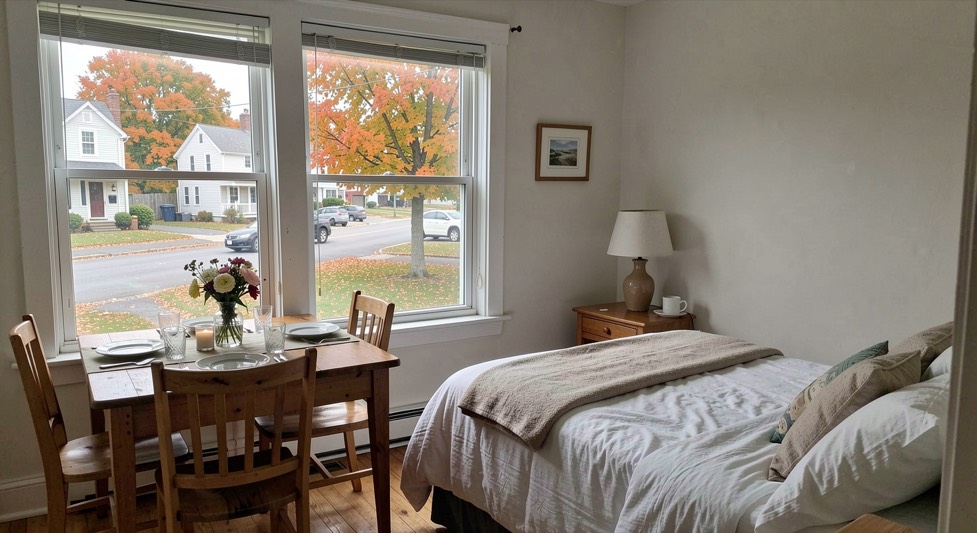
Community development is the work of improving a place together with the people who live there, and it is paid for through a small set of channels: community development financial institutions, nonprofit loan funds, bank lending, public trust funds, tax credit equity and philanthropy, each one attached to a different stage of a project. The useful work begins by looking closely, naming the trade-offs, and keeping the next decision visible. This guide is a starting point for a conversation, not a substitute for a site visit or qualified professional advice where the work requires it.
What does community development actually mean, and who does the work?
Community development means improving a place together with the people who already live there, and the work is carried by several kinds of organization rather than by one. A community development corporation buys and rehabilitates a building. A housing trust funds the units inside it. A city department runs the programs and the zoning decisions. A community development financial institution lends the money. Residents set priorities through meetings, boards and neighborhood plans. Each part has its own budget, its own rules and its own clock, which is why the work moves slowly and why the same project can look stalled for a year and then move in a month. The same habit of reading the documents before signing applies to a private renovation, where checking a contractor's licence and quotes comes before the first payment.
Where the money actually comes from
Money for this work arrives through a small number of channels, and each channel carries conditions. Community development financial institutions raise capital from banks, foundations, government programs and their own members, then lend it to nonprofits and small developers. Nonprofit loan funds work the same way on a smaller scale. Banks lend under community reinvestment expectations and buy tax credits for equity. Public trust funds collect a dedicated revenue stream. Foundations make program related investments that are expected to be repaid. How these channels gather capital, price risk and recycle repayments is set out plainly by community development and housing finance, an independent resource on how this money is assembled, with a Washington DC focus. For a household rather than a project, that money usually arrives as a mortgage, and the documents a lender asks for decide how quickly the file moves.
What are the stages of neighborhood revitalization, and who funds each one?
Revitalization runs in stages, and the funder changes at each one. Predevelopment comes first: option agreements, surveys, environmental review and design, usually paid by a grant or a predevelopment loan that is repaid when the project closes. Acquisition and construction follow, funded by a construction loan, tax credit equity and public subsidy. Lease-up and stabilization come next, when the building has to carry its own debt service, often with a short term loan that waits for permanent financing. Preservation is the stage most easily skipped, because a building that was affordable twenty years ago can leave the program when its restrictions expire unless a new round of money is raised to hold it. Reading a market before money is committed works the same way, and price per square foot beside rental yield is where that reading begins.
Who invests in underserved neighborhoods, and through which channels does the money flow?
The investors are fewer than the phrase suggests, and their channels are specific. Banks invest through loans, credit lines and tax credit equity. Credit unions and mission driven banks lend on terms a conventional lender would decline. Community development financial institutions lend from revolving pools, so each repayment funds the next project. Public agencies invest through trust funds, federal block grants and property tax agreements. Foundations invest through recoverable grants and program related investments. Individual donors fund the smallest pieces, and those pieces often decide whether a project opens at all. Following the money means asking which channel is attached to the building in front of you, and what that channel requires in return. Property also changes hands inside a family, and a will or a revocable living trust is the document that decides who holds the house next.
Why the money is layered instead of granted
A single affordable project is almost never paid for by one source. The money is stacked: a first mortgage, a soft loan at one percent, tax credit equity, a deferred developer fee, a grant for the environmental work, and a reserve for the first years of operation. Each layer reports to a different party and exits on its own schedule. Layering exists because no single source is at once large enough, patient enough and cheap enough. It also explains a three year closing, since every layer has a review and the reviews do not run at the same time. A reader who understands the stack can open a project's public financing documents with fewer surprises. An older house is layered in the same way, and a replacement window schedule is easier to compare when every line names its frame, glazing and opening. The same stacking shows up in a house, where a thermal barrier, earth tubes and a roof collector are added one layer at a time.
How this reads in a New England mill town
The pattern is as visible in a New England mill town as in a large city. A vacant mill or a closed school becomes the site. A regional nonprofit takes it on. A state housing agency, a community loan fund and a local bank assemble the stack. The town contributes a tax agreement and a zoning decision. Smaller work uses the smallest channels, and the ladder is the same at every scale: a volunteer group, a hall, a sale, a stated purpose. A December wreath sale run by a school or a team uses the habits described in how a school or team fundraiser works, with the same need for a defined purpose, a named sponsor and money that is accounted for. A mill building and a house share one constraint, the light and heat they receive, which is why reading a building against the sun's path comes before any new work.
What a resident can ask at a public meeting
Five questions get past the general statements. Who owns the parcel now, and who will own it after the work is done? Which funder provides the largest layer, and what does that funder require? What are the income limits, and how long do they last? What happens when the affordability period ends? Who is responsible if the project stops halfway? Most of those answers sit in public documents, and asking them changes the conversation from intentions to structure. A resident who asks them is not opposing the project. That resident is reading it. The same questions apply to the collection schedule on a residential street, where set-out times and approved containers are written down and enforceable.
The public sources worth reading first
Most of this material is public. The Community Development Financial Institutions Fund at the United States Treasury explains what certification means, how an institution earns it and which organizations hold it, which is the quickest way to check whether a lender in a project is what it says. Local programs live in city and state housing agency documents, and the annual reports of the nonprofits involved usually name every layer of the stack. Reading one project's papers from start to finish teaches more than reading ten summaries of the field. Some public sources are about safety in the home rather than about money, and smoke, carbon monoxide and heat alarms is a check that costs little and is documented by public agencies.
What community development is not
It is not charity, although donations fund parts of it. It is not one program with one application, although several programs are usually involved. It is not a promise that a neighborhood will change in the direction its residents want, because that depends on who is at the table when priorities are set. And it is not fast. The useful version of the idea is modest: a defined project, a stack of patient money, a local sponsor and residents with a real say. When one of those four is missing, the other three usually struggle. It is also not the same as furnishing a house, where reading materials and marks before buying an object is a separate discipline.

Related reading
- New England homes for a broader set of practical notes
- Betsy Hines for the complete field guide archive
- All Neighborhoods for the rest of this section