Closing, opening and relining a pool in a cold climate
A pool in New England is closed in autumn and opened in spring, and the liner shows the cost of every careless season. Know the closing steps, the spring checks and the signs that a liner needs replacing.
- 5 minute read
- By Betsy Hines
A pool in New England is closed in autumn and opened in spring, and the liner shows the cost of every careless season. Know the closing steps, the spring checks and the signs that a liner needs replacing. The useful work begins by looking closely, naming the trade-offs, and keeping the next decision visible. This guide is a starting point for a conversation, not a substitute for a site visit or qualified professional advice where the work requires it.
What does a pool need before a New England winter?
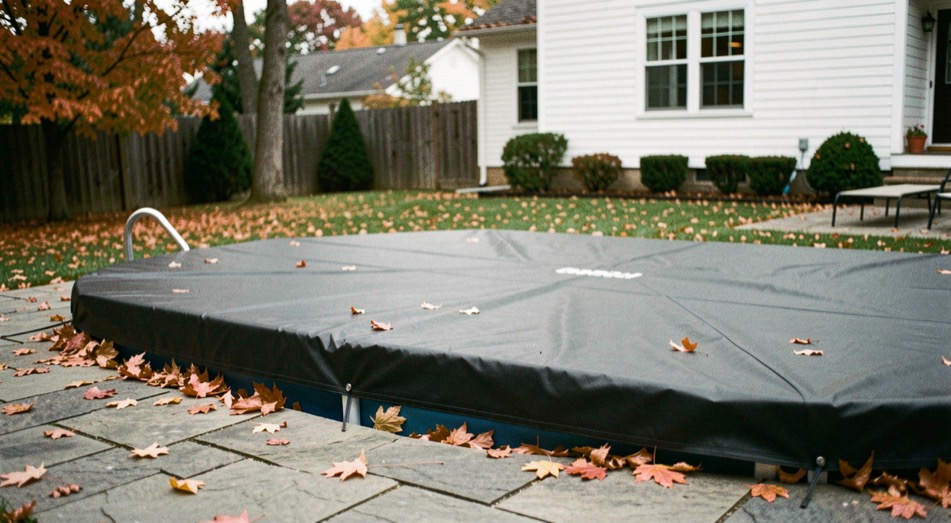
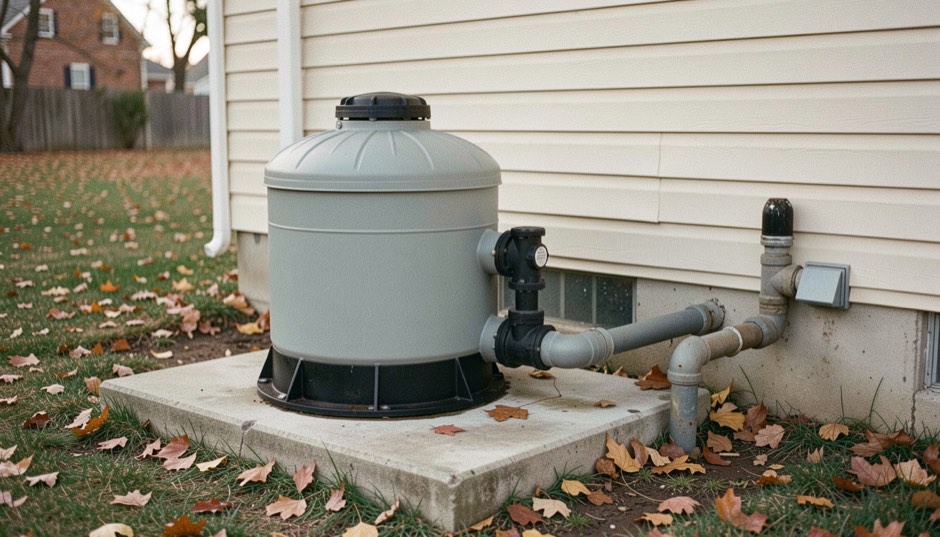
Four things: balanced water, a lowered level, drained equipment and a cover that stays put. Test and adjust the chemistry first, because water left unbalanced over the cold months can stain or etch surfaces that were fine in September. Lower the level to the mark the manufacturer gives for your pool, which is normally below the skimmer and return fittings, so that freezing water cannot crack them. Drain the pump, filter, heater and lines, and protect the plumbing with whatever method the manufacturer and installer recommend for your system. Then fit a cover that is tight, supported and anchored. Pick a settled day in early autumn for closing, before leaves fall in numbers and before the first hard freeze, and give the job a whole afternoon rather than an hour. Skipping a step saves an hour in October and can cost a repair in April.
Why does the liner matter more than the shell?
Because it is the part that actually holds the water, and the part that ages fastest. A vinyl liner sits inside a shell of wall panels and a floor, and the shell can stay sound for years after the liner has stopped doing its job. A pool builder near Aix-en-Provence in France, offering pool renovation and liner replacement next to shell pools and custom concrete pools, treats the liner as its own job, and that is a helpful way to think about it at home. The liner is cut to the pool's measurements, set against the walls and stretched over the floor with the water that goes in, and it meets the skimmer, the returns and the steps at fittings that have to stay watertight. When the liner ends its life, the shell, the plumbing and the surrounding deck do not have to be replaced with it.
How do you open a pool in spring without surprises?
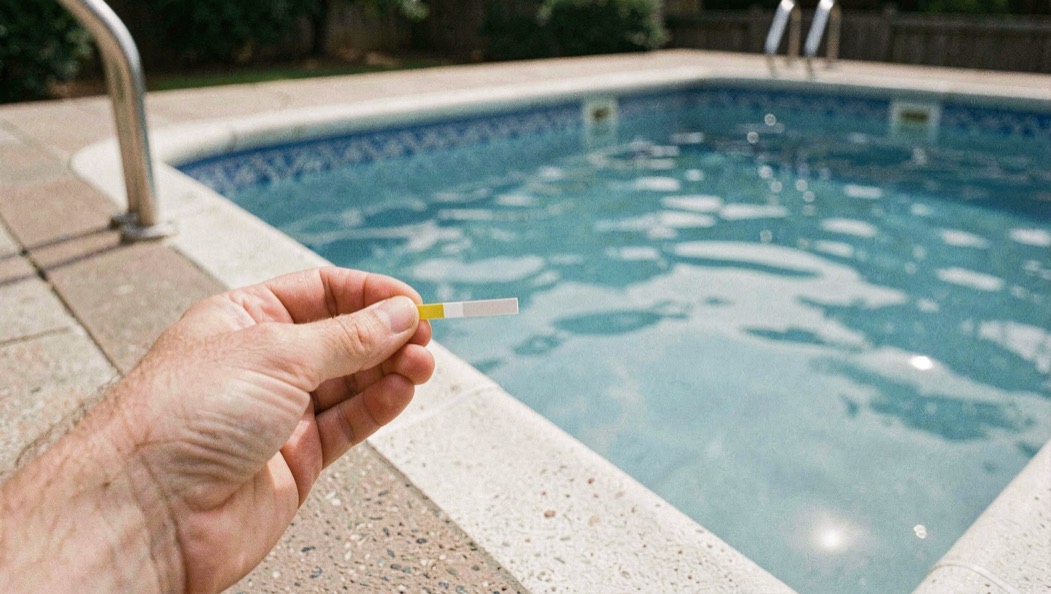
Open on a calm, mild day and work from the top down. Clear water and debris from the cover before lifting it, so that nothing slides into the pool, then fold and store the cover clean and dry. Refit the plugs and fittings you removed in autumn, reconnect the equipment, fill the pool to its operating level and prime the pump. Check each fitting and the plumbing for drips before running the system for a full day. Then test the water, adjust it and filter until it clears. While the pool is still easy to see into, look closely at the liner: wrinkles along the floor or the steps, fading, soft or brittle patches and stains around the fittings each tell you something. A small bubble or crease noted in April is a question for the installer; the same flaw found in August is usually a bigger one.
When is a liner past saving?
Look for the signs that repair no longer makes sense: a liner that has faded to a chalky surface, patches that crack when pressed, repeated wrinkles that return after they are smoothed, a water level that falls faster than evaporation explains, and seams that open. Patching a small tear is practical. Patching a liner that is failing everywhere is a way of delaying the same bill. Liner life depends on sun, chemistry, cover use and care, and the figures often quoted by the trade run to about a decade or somewhat more; treat that as a rough guide, not a date. Replacement involves draining the pool, removing the old liner, checking the walls and floor underneath for damage, fitting the new one and refilling. The work is easiest in a dry, mild spell, outside the swimming season, with the installer's schedule agreed in writing.
What is the cold-climate trap with water level?
Draining a vinyl-liner pool fully for winter is a common mistake. Most manufacturers advise against it, because the liner can shrink and pull, and because groundwater in the soil around the pool can press on the walls and floor once the weight of the water is gone. The safe rule is to follow the closing instructions for your own pool, and to ask the installer if the paperwork has been lost. Freezing is the other risk. Water standing in a skimmer, a return line or a pump housing expands as it freezes and can split what holds it, and the split is only discovered when the system is started in spring. Both traps have the same remedy: a written closing routine, kept with the pool's papers, ticked off each autumn and handed on with the house when it is sold.
What does a cold-climate pool share with the rest of the house?
A great deal. A cover collects wet leaves, branches and snow, which is why a pool belongs on the same autumn walk-through as gutters and branches, as described in preparing a New England home for nor'easter season. Where the pool sits matters too: shade from deciduous trees sends leaves into the water, while open ground gives longer sun, a trade-off covered in designing a house around the sun's path. Safety belongs in the plan from the first day, including fencing, gates that latch and a cover that carries its weight. The Pool and Hot Tub Alliance, at phta.org, is the industry association for pools and spas in the United States and a reasonable place to start for general information.
What should a liner replacement quote contain?
List the scope row by row so that bids can be compared: draining and disposal of the water, removal of the old liner, repair of the walls and floor, the new liner with its pattern and thickness, refitting of skimmer, returns and steps, refilling, and the first round of chemical balancing. Ask who measures the pool and how, since an ill-fitting liner is a frequent cause of early wrinkles. Ask what happens if damage is found under the old liner, and at what price. Ask for the warranty on the material and on the installation as two separate items. Confirm the firm's registration and insurance before signing, using the checks in vetting a renovation contractor before you sign. A written scope turns a vague promise into something you can hold the firm to in a dispute.
Related reading
- New England homes for a broader set of practical notes
- Betsy Hines for the complete field guide archive
- All New England Living for the rest of this section